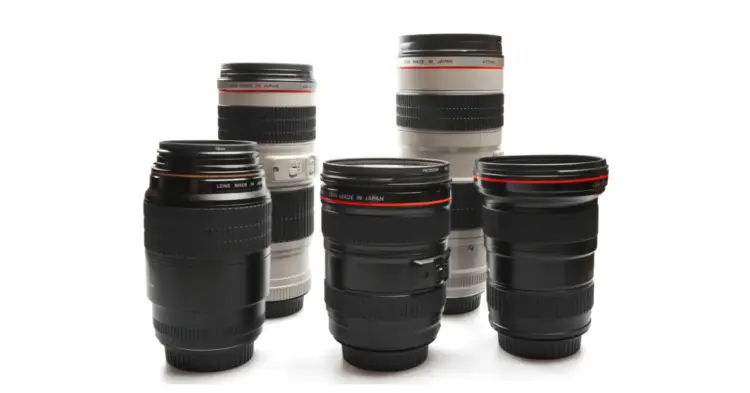
Zoom lenses make photography convenient. Too convenient. You stand in one spot, twist the zoom ring, and capture whatever focal length feels right. No movement required. No creative thinking necessary. This convenience creates passive photographers who rely on equipment instead of vision. This challenge fixes that. For the next 30 days, you’ll use only one focal length. No zooming. No lens swapping. Just you, one lens, and the creative problem-solving skills you’ll develop when gear stops being the solution.
TL/DR: Use one focal length for 30 days. Choose a prime lens or tape your zoom at one mark and leave it there. This forces movement, creative positioning, and intentional composition. You’ll think differently about every shot. After 35 years teaching photography, I’ve watched the most dramatic creativity jumps happen when photographers face meaningful constraints. Equipment solves problems until you remove the option to keep reaching for different gear.
Table of Contents
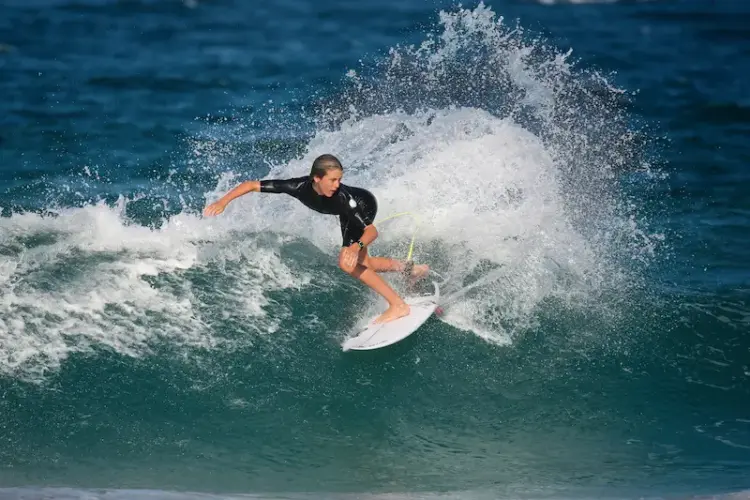
What makes a successful photograph?
Successful photographs share common qualities, regardless of subject matter or style. Understanding these helps you see why limiting your gear forces improvement in multiple areas at once.
Great images usually exhibit one or more of these qualities:
- They have great lighting
- They have a clear subject
- The viewer is drawn into the image
- There is a story being told
This challenge directly strengthens #3 – viewer engagement.
When you move your body instead of zooming, you discover angles and perspectives that pull viewers into your frame.
You get physically closer to subjects, creating intimacy. You shoot from unexpected positions – low, high, through objects – because your fixed focal length demands it.
The creative problem-solving you’ll develop improves all four qualities over time.

Why does limiting your lens improve your photography?
Zoom lenses create passive shooting habits. You see something interesting, raise your camera, and adjust focal length until the composition looks right. Your feet stay planted. Your brain stays idle. The lens does the work.
I can’t remember how many time’s I’ve said “Zoom with your feet” at my workshops.
Fixed focal lengths force active thinking. You see something interesting, raise your camera, and discover your composition doesn’t work.
Now your brain engages. Move closer? Step back? Shoot from ground level? Find a higher position?
Your body moves.
Your mind solves problems.
You create the shot instead of the lens creating it for you.
This shift from passive to active shooting changes everything. Movement reveals angles you’d never consider while standing still. Getting physically closer to subjects creates connection and intimacy. Discovering you’re “stuck” with the wrong focal length forces creative solutions that become stronger photographs than your original vision.
Creativity emerges from constraint.
When equipment stops solving your problems, your vision develops.
What happens when you rely on zoom lenses?
You develop predictable patterns. Stand at a comfortable distance. Zoom in for tighter framing. Zoom out for context. The camera does the thinking while you do the clicking.
These patterns feel efficient until you review your images and notice they all look similar. Same perspective. Same shooting height. Same relationship to your subjects. Your zoom lens became a barrier between you and creative composition.

Have you found yourself doing this? Standing in one spot for an entire shoot, zooming in and out without ever moving your feet? Taking essentially the same photograph from the same position, just at different focal lengths?
This happens to everyone who shoots with zooms. The convenience becomes a crutch. You stop engaging with your environment because adjusting focal length feels like enough effort.
Jim Ruse recognized this pattern after completing the challenge: “I have been using my Nikon 50mm 1.8 prime for a month. I’m growing to love this lens. It makes me become more engaged with my environment and my subject.”
Physical movement creates engagement. You stop observing from a distance and start participating in the scene.
Your 30-Day Practice Plan
Commit to using only one focal length for the next 30 days. This removes the option to zoom your way out of compositional challenges and forces creative problem-solving through movement and positioning.
Choosing Your Lens
If you have prime lenses:
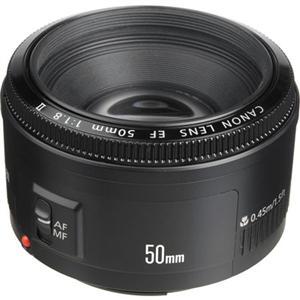
- Select one lens (50mm recommended for full-frame, 35mm for crop sensor)
- Put it on your camera and leave it there
- Pack away your other lenses to remove temptation
If you only have zoom lenses:
- Pick one focal length within your zoom range (35mm or 50mm equivalent works well)
- Set the lens to that mark
- Tape it in place with gaffer tape or painter’s tape
- Leave it there for 30 days – no adjustments
Week 1-2: Learning to Move
Photograph your normal subjects but move your body instead of adjusting focal length. Walk closer when you want tighter framing. Step back when you need more context.
Pay attention to background changes as you move.
Observe how getting lower or higher affects your relationship to the subject. Document what feels awkward or uncomfortable – those feelings signal growth.
Week 3-4: Creative Problem-Solving
Deliberately choose challenging situations where your fixed focal length seems like the wrong choice. Indoor events where you’re “too close.” Landscapes where you’re “too far.” Wildlife where you “need more reach.”
Force yourself to find solutions.
Shoot details instead of full scenes. Use your environment to frame subjects. Change your position until the composition works.
Success Markers
You’ll know this challenge is working when:
- You move closer or farther without thinking about it
- You find compositions you wouldn’t have seen with zoom flexibility
- You stop missing the zoom and start seeing opportunities
- Your keeper rate increases because every shot requires intention
- You catch yourself looking for interesting angles before raising the camera
Challenge Instructions
Duration: 30 days
Equipment: One prime lens OR one taped focal length on your zoom
Shooting frequency: Every time you pick up your camera this month
Step 1: Choose your focal length and commit (50mm full-frame, 35mm crop sensor recommended)
Step 2: Remove all other lenses or tape your zoom at the chosen focal length
Step 3: Move your body to solve composition problems – no zooming allowed
Step 4: Shoot from unexpected positions when your focal length seems “wrong”
Step 5: Review your images weekly – notice how movement changed your perspective
Week 1-2 Focus: Move instead of zoom. Notice how position affects composition.
Week 3-4 Focus: Seek challenging situations. Force creative solutions through constraint.
30 days of fixed focal length shooting rewrites your approach permanently. Give yourself this full month to break zoom-dependent habits.
Get More Challenges Like This One
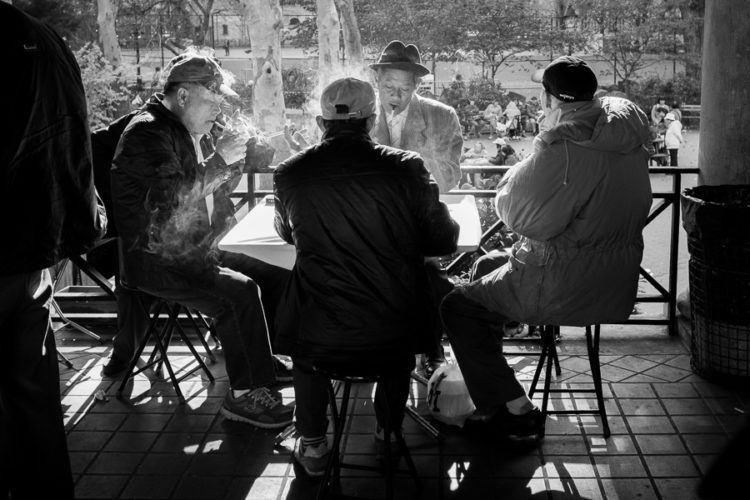
Which focal length should you choose?
The 50mm f/1.8 lens is my strongest recommendation for most photographers. I’m a huge fan – you’ll know that if you’ve taken any of my courses, workshops, or joined us on photography tours. This lens excels for several reasons.
For full-frame cameras: 50mm
- Natural perspective similar to human vision
- Lightweight and compact
- Inexpensive (around $100-200 for f/1.8 versions)
- Wide f/1.8 aperture for low light shooting
- Creates beautiful bokeh backgrounds
- Versatile for portraits, street photography, everyday shooting
For crop sensor/APS-C cameras: 35mm
- Provides equivalent field of view to 50mm on full-frame
- Same benefits: light, affordable, wide aperture
- Slightly wider perspective suits crop sensor cameras better
Already own a prime lens? Use whatever you have. 24mm, 85mm, 100mm – any fixed focal length works for this challenge. The focal length matters less than the commitment to one choice.
Only have zoom lenses? Pick a focal length in the middle of your zoom range. On an 18-135mm lens, choose 35mm or 50mm. Set it there, tape it in place, and resist all temptation to adjust. The tape serves as both physical barrier and mental reminder of your commitment.
The 50mm f/1.8 works beautifully because that wide aperture lets in tremendous light. You’ll shoot successfully in dim conditions without raising ISO to noisy levels. You’ll create those soft, blurred backgrounds that separate subjects and look professional. And the lens costs less than most camera bags.
What about missing shots?
This fear stops photographers from trying this challenge. You imagine the perfect moment appearing while you have the “wrong” lens attached. You picture yourself frantically wishing for different focal length while the opportunity disappears.
Here’s what actually happens.
You might miss some shots by having one focal length. That’s true. The wildlife moment when you needed 200mm but had 50mm. The architectural detail requiring 24mm when you’re shooting 85mm. These moments will occur.
But something else happens simultaneously.
You get new and different shots you never would have considered before. Your heightened creativity replaces what you thought you were missing. The shots you might miss get replaced with others that are as good or better – often more interesting because they required creative problem-solving instead of equipment solutions.
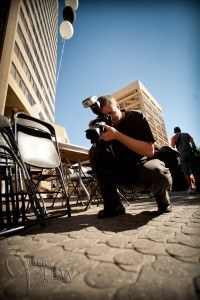

Sackie Sakai experienced this tension in Tokyo with her Canon Rebel T3i taped at 35mm:
“I have to say, this task was harder than I expected. I wanted to take some pictures but couldn’t quite get the shots I hoped for. I was quite tempted to take the tape off my camera a few times, but resisted the urge and decided to try different approaches to my photos. I realized that I don’t need a bag full of lenses to be a confident photographer, instead I look to get closer or further away, positioning myself to take the picture I have in mind, and if that isn’t enough, I can always find new perspectives, compositions or details to photograph. These last days I found myself laying on the ground, leaning over fences, and stopping in the middle of the streets to take my pictures. I really enjoyed this challenge, but I’m sure the Japanese people who were looking at me on the street enjoyed it more!” – Sackie Sakai
Notice what Sackie discovered: the temptation to quit was real, but pushing through revealed that gear wasn’t the limitation – her approach was.
She started moving her body creatively instead of relying on zoom range. She found herself in positions she’d never considered before.
Those positions produced photographs she wouldn’t have captured with zoom flexibility.
This challenge is a mind game with yourself. Move past the feeling of missing something. Stop thinking about what you don’t have. Use what you DO have to its full potential.
Remember this phrase: Love the one you’re with.
After Stephen Stills sang those words in 1970, they became advice for life. The same wisdom applies to photography.
Stop wishing for different gear. Fall in love with what’s in your hands right now. Explore its full capabilities. Discover what it does brilliantly. Work within its limitations until those limitations become creative advantages.
What will you notice after 30 days?
Your movement becomes automatic. You’ll spot a potential photograph and immediately start walking toward it or backing away before consciously deciding. Your feet move before your brain catches up. This automatic positioning creates better compositions because you’re physically engaging with your environment.
Your composition improves through positioning. Standing still with a zoom teaches you to think in terms of focal length. Moving with a fixed lens teaches you to think in terms of space, angle, and relationship to subject.
This spatial thinking produces stronger photographs regardless of what lens you eventually use.
Your connection to subjects strengthens.
Getting physically closer to people, objects, and scenes creates intimacy that zoom lenses never achieve. You become part of the environment instead of an observer recording from a distance. Your subjects feel your presence and engagement. That shows in your photographs.
Your creativity increases through problem-solving.
Every challenge you face with your fixed focal length requires a solution. You develop dozens of techniques for working around limitations. These techniques become permanent tools in your creative toolkit.
Jutta Bialke questioned her lens purchase until this challenge proved its value:
“I was a little doubtful of my purchase of the Canon 50 mm f/1.4 since I already had the 1.8, but your challenge has made me love this new lens. I stuck with it and it paid off. I am quite amazed at the wonderful photos I made in different conditions, both inside and out. I passed the 1.8 on to my grandson who is taking photography courses in school and is loving it. It’s a great addition to his camera bag, and hopefully he’ll love it as much as I love my new f1.4. Thank you for making me see the full potential in this wonderful lens.” – Jutta Bialke
Commitment to one tool reveals capabilities you’d miss while constantly switching gear.
Jutta discovered her 50mm f/1.4 performed beautifully in conditions she initially thought required different focal lengths. She learned the lens instead of learning to swap lenses.
Gloria Roldan found unexpected features through deep familiarity: “I had chosen to use the Lensbaby Spark. I discover I could swop out and use different optics. It’s been fun.”
Thirty days with one lens teaches you what it does well and how to work within those boundaries creatively. You stop fighting limitations and start leveraging them.
What did other photographers discover using one lens?
Photographers who completed this challenge reported breakthroughs they didn’t expect. The constraint forced them outside comfortable patterns and revealed capabilities they didn’t know they had.
The common thread through all their experiences: restriction breeds creativity. When you remove the option to zoom your way out of compositional challenges, you develop real problem-solving skills that transform how you see and shoot.
These skills stay with you long after the challenge ends.
Even when you return to using multiple lenses and zoom ranges, you’ll find yourself moving more, thinking spatially, and engaging physically with your environment. The 30-day constraint creates permanent improvements in your photographic vision.
How does this connect to better photography overall?
Active shooting versus passive shooting defines the difference between photographers who improve rapidly and those who plateau. This challenge forces you from passive to active.
Movement and positioning awareness carries to all photography. Once you develop the habit of moving to improve composition, you’ll apply it regardless of what lens you’re using.
You’ll notice landscape photographers who walk half a mile to find the perfect foreground element instead of standing at the parking lot with a zoom.
You’ll observe portrait photographers circling their subjects to find the best light and background instead of asking subjects to move.
These photographers think spatially because they trained themselves to move.
Creative problem-solving becomes habit. Every time you face a photographic challenge with limited tools, you develop techniques for working around constraints.
These techniques accumulate.
After this challenge, you’ll have 30 days worth of solutions you discovered through necessity. Those solutions apply to situations far beyond fixed focal length shooting.
Inside our free Photography Basics course, the composition module and lens selection lessons provide the technical foundation that makes this challenge even more powerful. Understanding how focal length affects perspective, compression, and field of view helps you predict what moving closer or farther will achieve.
The technical knowledge combined with hands-on constraint practice produces rapid skill development.
This challenge also connects directly to Challenge #5 in our 10 Photography Challenges ebook: “Limit Yourself on Purpose.” That challenge explores constraints across multiple dimensions – one lens, one color, one subject type, feet-only photography.Each constraint develops different creative muscles. This 30-day lens challenge provides deep practice in one specific limitation.
The skills transfer everywhere.
Wedding photographers shoot entire events with one or two primes. Street photographers work all day with a 35mm. Portrait photographers discover their best work comes from one favorite focal length used masterfully.
These professionals understand what you’ll learn through this challenge: mastery of one tool beats mediocre familiarity with many tools.
Learn more about lenses and focal lengths
- How to Use Depth of Field – Understanding how aperture affects your images with prime lenses
- 5 Mistakes Beginners Make Using a Wide Angle Lens – Focal length fundamentals that apply to all lenses
- What Is Your Message? Storytelling Photography – How lens choice affects the stories you tell
Ready for more challenges?
New to our challenges? This one-lens exercise is one of dozens we’ve created to help photographers build specific skills through focused practice. Download our free 10 Photography Challenges ebook and get foundational exercises including “Limit Yourself on Purpose” (Challenge #5) which explores this concept across multiple constraints.
Already working through our challenges? Join the DPM Community where photographers share their challenge results, get feedback, and stay accountable. See what others discovered by limiting themselves to one lens for 30 days.
Inside our Photography Basics course, you’ll learn how different focal lengths affect perspective, composition, and storytelling – technical knowledge that makes constraint challenges like this one far more effective. Understanding the why behind focal length choices helps you make better decisions when you’re limited to just one.