
You might not need a new lens. You might need to step back, reframe, and simplify. Most beginner photographers try to capture too much in one frame. The result feels crowded and unclear. Even you might look at your own images later and wonder what you were photographing. This challenge helps you create stronger, more intentional images by removing what doesn’t belong. Focus on one subject. Eliminate clutter. Pay attention to background, framing, and distractions. Over the next two weeks, you’ll train your eye to see what matters and ignore what doesn’t.
TL/DR: Focus on one subject. Eliminate clutter. Pay attention to background, framing, and distractions. Use light, shallow depth of field, or tight crops to draw the eye and create impact. After 35 years of teaching photography, I’ve watched thousands of photographers transform their work simply by removing what doesn’t belong. This month’s challenge will train your eye to see what matters and ignore what doesn’t.
What are the qualities of a good photo?
Great images usually exhibit one or more of the following qualities:
- They have great lighting
- They have a clear subject
- The viewer is drawn into the image
- There is a story being told
Let’s dig deeper into #2 – having a clear subject.

Why does simplifying your composition improve your photography?
Clear subjects make compelling photographs. When you remove competing elements, your viewer knows exactly where to look and what you want them to see. Great images rarely happen by accident. They result from deliberate choices about what to include and, more importantly, what to exclude.
Beginners often try to capture everything in one frame.
The scene felt overwhelming and beautiful, so they want the photograph to show all of it. The result feels crowded. The subject gets lost. Even the photographer struggles later to remember what they intended to capture.
After decades of teaching, I’ve learned that photographers improve fastest when they practice restraint. One subject. One message. One clear choice.

What makes cluttered compositions so common?
You see something that moves you. Mountains, light, a person’s expression. You raise your camera and try to capture the entire feeling in one shot. Your eye takes in the whole scene, but your lens captures everything equally, including distractions you didn’t consciously notice.
Have you experienced this?
Have you looked at your images later and asked yourself, “What on earth was I taking a picture of here?”
This happens to everyone.
Your eye and brain filter the world differently than your camera does.
You focus on what interests you and mentally blur the rest. Your camera records everything with equal sharpness and importance.
P James learned this lesson directly: “I learned from this lesson, it’s not all about the gear, it’s what you see before you and how you capture it.” The camera records what’s there. You decide what belongs in the frame.
Solange Paquette reported back that she recognized her own pattern: “I always tend to put too much in a picture in order to share the emotion of the subject. Thank you for reminding me that often, less tells more!”
The desire to share everything you feel creates images that say nothing clearly.

How do you simplify your compositions?
You don’t need to travel anywhere special. Try this in your home, your backyard, or on a walk around your neighborhood.
Start with these questions
Choose a subject. Then examine everything around it:
- What distractions pull attention away from my subject?
- How close should I get?
- Would a different angle or light help?
- What happens if I remove half of what’s in this frame?
Use these techniques
Check the edges for clutter and crop tighter. Walk closer or zoom in. The edges of your frame collect distractions you didn’t notice while shooting.
Blur the background using a wide aperture. Shoot at f/2.8 or f/4 instead of f/8. Your subject stays sharp while competing elements fade into softness.
Change your perspective. Move your feet. Shoot from low near the ground or from above. Different angles reveal cleaner backgrounds.
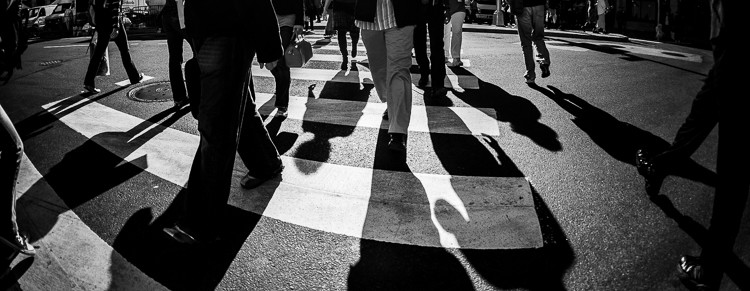
Use shadow or silhouette instead of showing full detail. Sometimes less information creates more impact.
Compose with negative space around your subject. Empty space gives your subject room to breathe and draws the eye naturally.
Try black and white to reduce visual noise. Color sometimes competes with your subject. Remove it and see what remains.
Photograph parts instead of wholes. Hands, feet, faces, textures. Fragments often communicate more than complete views.
Use a prime lens and move your body instead of zooming. Fixed focal lengths force you to think about position and framing instead of relying on the zoom ring.
Barbara F Smith discovered something unexpected: “I love intimate landscapes and usually use telephoto. I was surprised to discover I could make a minimalist image at 24mm.” Simplicity comes from your choices, not your focal length.

Your Two-Week Practice Plan
Commit to shooting simplified compositions for the next two weeks. Take at least 20 photographs during this period, focusing on one clear subject in each frame.
Week One: Learning to See Simply
Shoot 10-15 images around your home or neighborhood. Before each shot, ask yourself: “What is my one subject?” If you struggle to answer in five words or less, simplify further.
Review your images daily.
Circle the three where your subject is most obvious. Delete or set aside images where you’re unsure what you were photographing.
Week Two: Applying the Techniques
Shoot 10-15 more images using at least three different simplification techniques from the list above. Try blurred backgrounds one day, negative space the next, tight crops after that.
Compare your Week Two images to Week One. Notice which techniques feel natural and which challenge you most.
Success Markers
You’ll know this challenge is working when:
- You spot distractions in your viewfinder before shooting
- You move closer or change angles without thinking about it
- You delete fewer images because your intent was clear from the start
- Other people viewing your work immediately understand your subject
Challenge Instructions
Duration: 2 weeks
Goal: 20 photographs with one clear subject each
Review frequency: Daily for Week 1, every 3 days for Week 2
Step 1: Choose your subject before raising your camera
Step 2: Remove or avoid at least three distractions from your frame
Step 3: Apply one simplification technique from the list above
Step 4: Review immediately – is your subject obvious?
Step 5: Reshoot if your answer is “maybe” or “I’m not sure”
Week 1 Focus: Shoot 10-15 images. Practice seeing simply.
Week 2 Focus: Shoot 10-15 images. Apply specific techniques deliberately.
Two weeks of focused practice creates lasting habits. Give yourself this time to build the skill.


What will you notice after trying this challenge?
Your photographs will feel more intentional. You’ll spot background distractions before pressing the shutter. Your subject will be unmistakable to anyone viewing your work.
Folake Abass recognized a shift in her process: “This challenge was a great one as it gave me an opportunity to look closer and more critically at what I choose to photograph… I’m sometimes too ‘trigger happy’ and just want to take the shot without really looking at how else the scene can be captured. A great lesson learned.”
David Hayden found the challenge reshaped his entire approach: “Having photographed the area many times, your challenge gave me a new perspective, so to speak, and shaped my entire shooting experience for the day. One of the things about your challenge is it got me focusing on elements of design. So on the photo walk, I was looking for tonal ranges, shapes, leading lines, etc.”
He stopped photographing familiar places and started photographing design elements within those places.
The location stayed the same. His vision changed.
Rebecca Cullimore experienced this during a sunset shoot at Waterton Lakes: “We didn’t have the amazing colors we were hoping for, and I was disappointed until I remembered this challenge and decided to focus on ‘simplify’. The view was amazing and almost overwhelming of mountains and lakes, so I got some decent shots of the whole view, but the ones I really like, are the ones where I focused on one element.”

She transformed disappointment into discovery by changing what she looked for in the scene.
You’ll also slow down. This improves exposure accuracy, focus precision, and overall image quality. These small improvements compound quickly.
What did other photographers discover through this challenge?
Wayne Werner found that leaving details out told a richer story: “When I was reviewing the images, I realized that even a simple picture can tell a larger story. Looking at the bike hub, you can see the dirt and grease that tells you this bike is not a showpiece. It’s used. The bolt has a little rust on it, which can tell you that it was left outside a few times, or at least it got a little wet. But you can also see that the spokes, frame, and paint are in good condition, so it does get some care. That also reminded me that you can sometimes tell a better story if you leave details out.”
Notice what Wayne discovered. He photographed one detail of a bicycle. That single element revealed maintenance history, weather exposure, and owner care. A wider shot showing the entire bike would have diluted all those observations.
This illustrates why simplicity works.
You force viewers to look closely at what remains. They engage with your subject instead of scanning past it.
The photographers who completed this challenge reported similar breakthroughs. They stopped trying to capture everything and started choosing what mattered most. That single shift elevated their work immediately.
How does this connect to better photography overall?
Simplification teaches you to see like a photographer instead of like a casual observer. This skill transfers to every type of photography you’ll attempt.
Portrait photographers learn to manage busy backgrounds. Landscape photographers learn to find compelling subjects within overwhelming vistas. Street photographers learn to isolate decisive moments from chaotic scenes.
The principle stays constant. Choose one subject. Remove what competes with it. Create clarity.
Inside our Photography Basics course, this challenge connects directly to lessons on composition, depth of field, and visual storytelling. Students who master simplification progress faster through advanced techniques because they’ve built the foundation of intentional seeing.
When you know what belongs in your frame, you make better decisions about exposure, focus, and timing. Everything becomes easier when your subject is clear.
Learn more about techniques that support simplification
- Quality of Light: What It Is and How to Use It – Light direction and quality help separate subjects from backgrounds
- How to Use Depth of Field – Control what stays sharp and what blurs
- What Is Your Message? Storytelling Photography – Clarify what you want viewers to understand
- 5 Mistakes Beginners Make Using a Wide Angle Lens – Wider lenses capture more, which means more to manage
Ready to try this challenge?
Choose one subject this week. Remove everything that doesn’t support it. Notice what happens to your photographs.
If you’re part of the DPM Community or taking one of our courses, share your favorite simplified photo. Tell us what you left out and what made the image work better.
Not in the community yet? This is where photographers work on challenges like this every week. You’ll get feedback, stay accountable, and keep growing alongside
