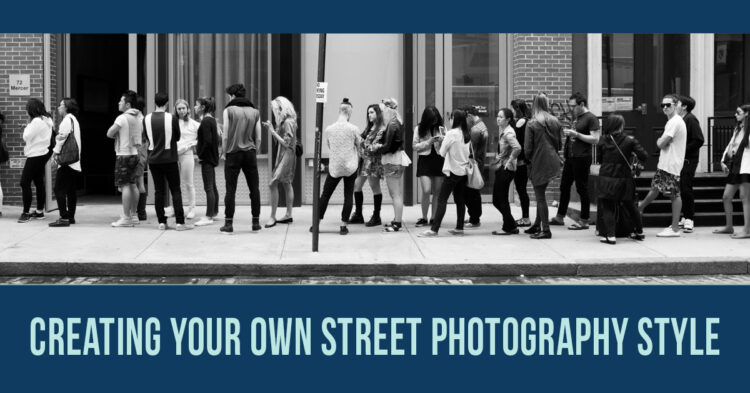
Consistency and creating a cohesive vision and style is one of the most difficult aspects to master in street photography. In this article, you’ll get some solid tips to help you create your own street photography style.
This is because street photography ultimately begins with a random collection of moments that were photographed by chance. The ultimate endpoint is an idea, a story, or a feeling that brings the viewer closer to you and who and what you are photographing.
But how do you do this?
What is the path that you need to take from walking out the door and looking around randomly to understanding what you are shooting, to ultimately putting together a consistent style of street photography, and body of work?
Key Takeaways:
- Experiment with Different Tools and Subjects – Use various cameras, lenses, and shooting techniques. Capture different people, scenes, and switch between color and black and white.
- Learn from Other Photographers – Study the portfolios of both historic and contemporary street photographers. Use books and online resources to understand their styles and apply aspects to your own photos.
- Maintain Consistency in Projects – Choose specific cameras and lenses for individual projects. Consistency in equipment and approach helps develop a cohesive style.
- Personalize Your Photographic Voice – Infuse your emotions and worldviews into your photography. Focus on capturing emotions and narratives that resonate with your personal experiences.
- Frequent Photography in Familiar Areas – Regularly photograph the same areas to gain deeper insights and moments. Consistency in location leads to intimate and detailed photography.
- Importance of Editing in Developing Style – Editing is crucial for grouping, sequencing, and creating a story or theme. The editing process influences shooting style and helps refine vision.
- Dedication and Time Commitment Spend substantial time in photography to capture moments that align with your vision. Consistent dedication is key to developing a significant, cohesive portfolio.
Discovering Your Unique Street Photography Style
Discovering Your Unique Street Photography Style involves a blend of experimentation with various equipment and subjects, drawing inspiration from both classic and contemporary photographers, and maintaining consistency in projects with specific gear and techniques.
Infusing personal emotions and viewpoints into your photography adds a unique touch, while regularly shooting in familiar areas helps develop a deeper, more intimate style.
Editing plays a crucial role in shaping your vision, crafting stories, and fine-tuning your style. Finally, a strong commitment to regular photography practice is essential to evolve and refine your unique approach to street photography.
Here are my tips to help you figure out the path to improving your street photography by creating your own style.
Experiment and switch it up
Experimentation is key.
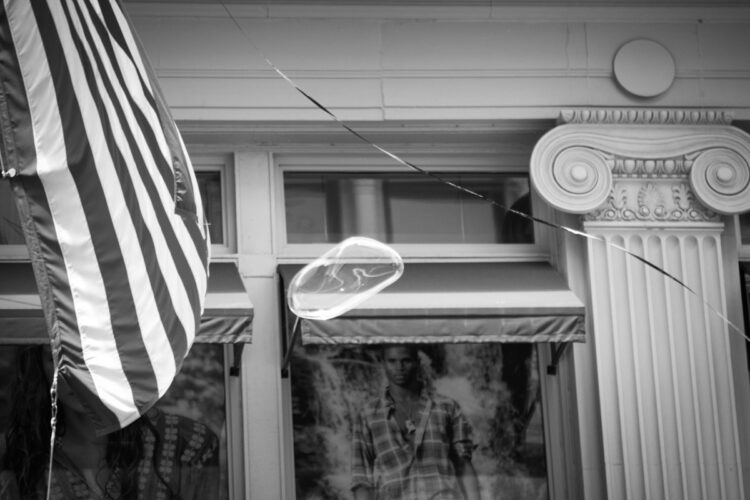
Try different cameras, lenses, and shoot in various areas. Capture diverse types of people in color and black and white. This varied approach helps develop a unique style. Remember, your work doesn’t have to look the same to be cohesive. What matters is your vision and the ideas you portray.
I would argue that style is more about what you choose to photography than how you choose to shoot it. Your photographs don’t have to all specifically look the same to have a cohesive style. What will ultimately bring your style together is the vision that you develop and the ideas that you choose to portray.
Because of this, I think it’s very important to experiment. Try different cameras and different lenses. Try color and black and white. Shoot in different areas. Capture different types of people. The more you try, the more tricks and looks you will be able to bring into your own photography which will help you develop over time.
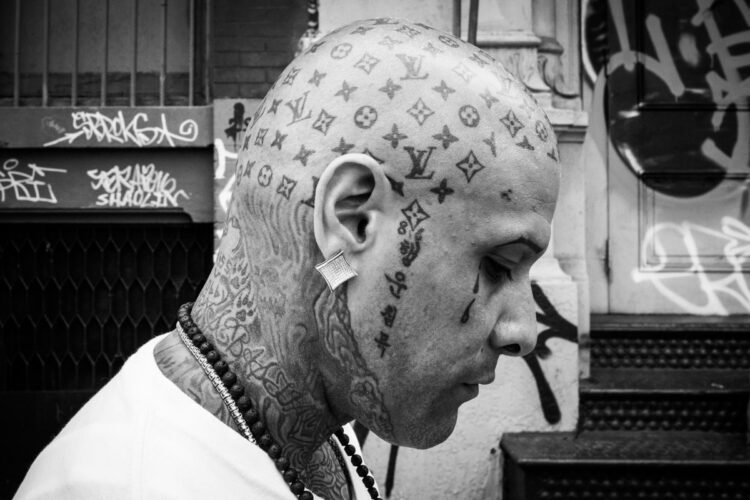
The important thing to mention here is that different portfolios can look different. All of your photos just do not have to look the same to be a consistent body of photography. It’s great if it does, but it’s okay if it doesn’t.
Maybe one of your ideas will be best done with a small camera 35mm prime lens. It might include lots of chaotic moments on street corners and you choose to convert the images to black and white.
Another option is to use a medium format camera with a longer lens in quieter areas, include more portraits, and shoot in color. Your vision, quirks, and style can be cohesive through these different portfolios even if they are created with different cameras and have different qualities to how they look and how you shot them.
Study the work of other photographers
Learning from other street photographers broadens your horizons.
Explore the history of famous street photographers as well as contemporary. Dive into their street photography books to understand their vision fully. This research influences your style, helping you adopt favorite aspects from other photographers.
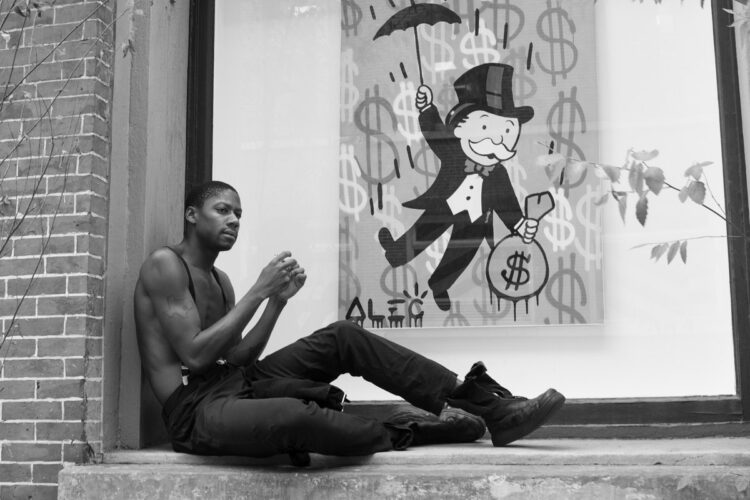
Over time, you will learn what you like and dislike and you will start to bring your favorite aspects of other photographers into your work as you build your own unique style. This will broaden your sense of possibilities when out photographing.
When looking through the portfolios of other photographers who have been around for a long time, it is amazing to see how their photos look and feel completely different, despite possibly shooting in the same areas and same circumstances.
Their ideas and vision shine through despite what is presented to these photographers in the real world.
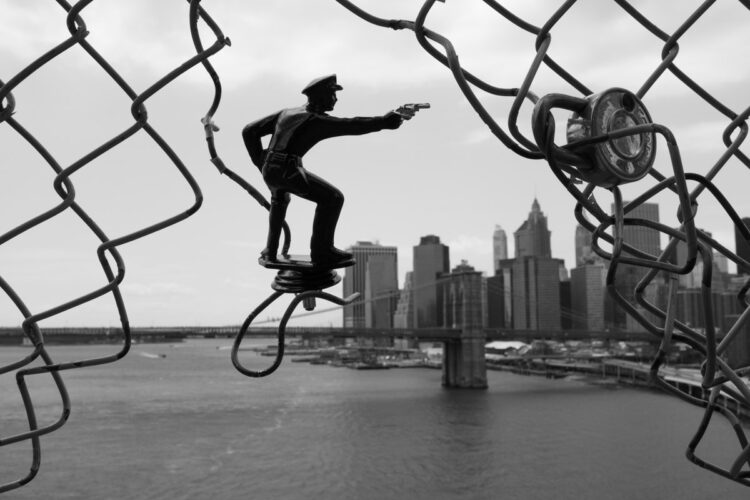
Start by learning about the history of famous street photographers, then explore more contemporary work. The internet is an incredible resource you can use to learn about many photographers in a short period of time.
But there is only so much you can learn on the internet. It’s tough to get a full sense of any photographer’s vision while just looking at a small number of top-hits from a photographer who has been shooting for decades.
Once you choose some photographers you like, the next step is to explore their street photography books. This is where and how street photographers are able to show their full vision, through sequencing and design.
NOTE: Check out James’ ebook The Essentials of Street Photography & Street Photography Conversations (use the code DPM to get $5 off).
Books can share not only their most jaw-dropping photos but also their more subtle and nuanced ones that you might never see on the internet. The photographer can set a tone and a pace and take you slowly through an idea without any distractions. And there is just no comparison to seeing photographs on a printed page.
Consistency in Projects
Stick to specific elements for each project.
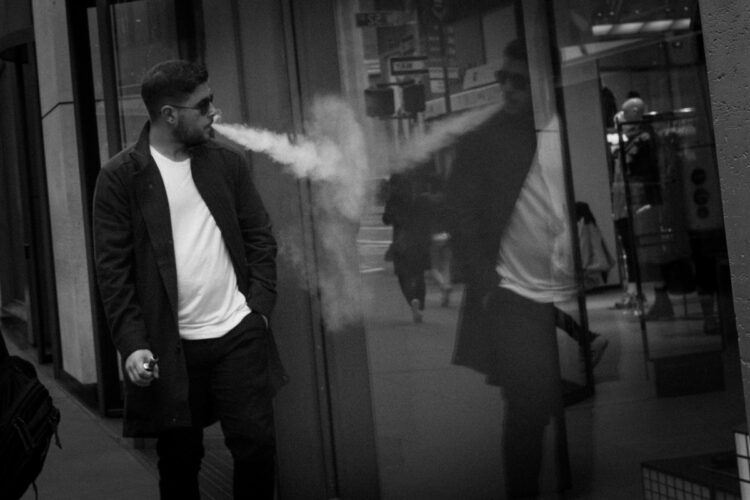
Choose a camera, lens, and focus on what and how you want to shoot. Consistency in these elements for each project helps in building a cohesive style, even if your overall portfolio varies.
The time to be fully consistent in how you shoot is for each of your individual projects. Pick a camera, pick a lens, figure out what you want to shoot and how you want to shoot it, and stick with it.
While it’s possible and some photographers do it very well (and you can too), it is very difficult to have a consistent body of work where all of the photographs look completely different. It’s distracting.
Find your vision – build your voice
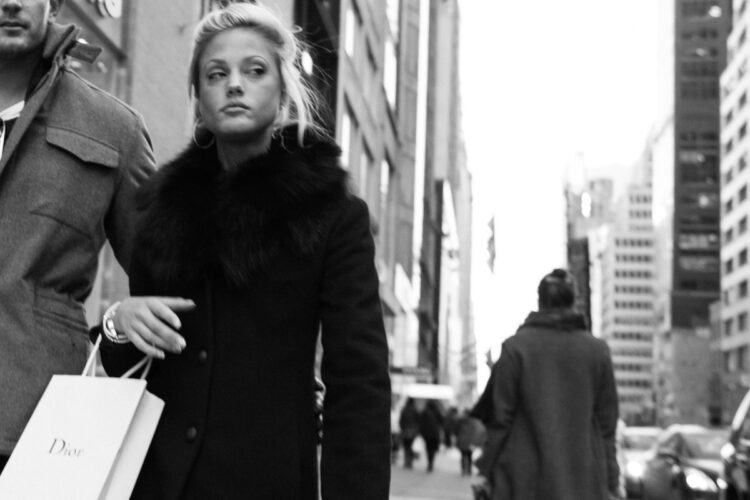
Much of the best street photography is very personal. The better you know yourself, the better and more intimate the results will be.
How do you see the world? Are you happy, sad, lonely, hopeful, anxious, or angry?
Bring these aspects out in your own photos. Search for people who are feeling similar things and try to capture them showing that emotion. Pay attention to their expressions, the looks in their eyes, or the gestures in their bodies.
Use the aspects of the world that you are the best at noticing to show a strong vision.
Photograph the same area consistently
Repeated visits reveal deeper insights.
By frequently photographing the same area, you’ll notice new moments and understand the place and its people better. This repeated exploration leads to intimate, detailed photography that strengthens your style.
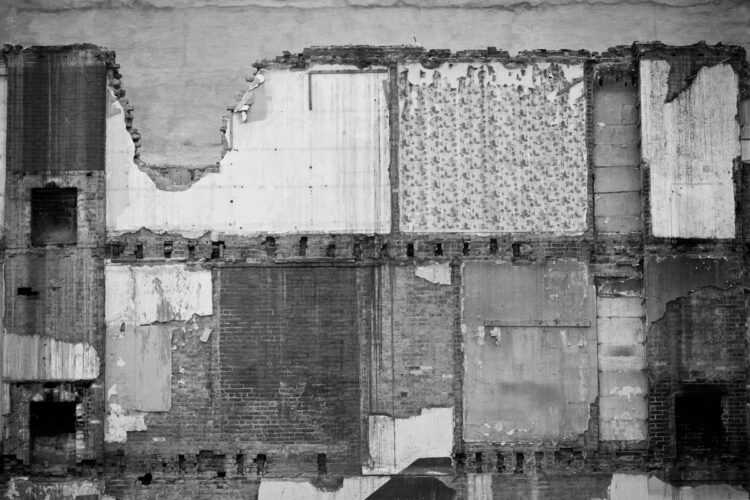
Similarly, you can do this with an area instead of yourself. You can use your photography to diagnose a place.
While you can and should explore new areas as often as you like, go back to the best spots over and over again and try to show what they are really like. The more time you spend in an area, the better you will understand it.
Moments will pop out at you each time you go to that spot, that you may have completely missed on previous trips. It’s incredible how this will continue to happen the more time you spend in that place.
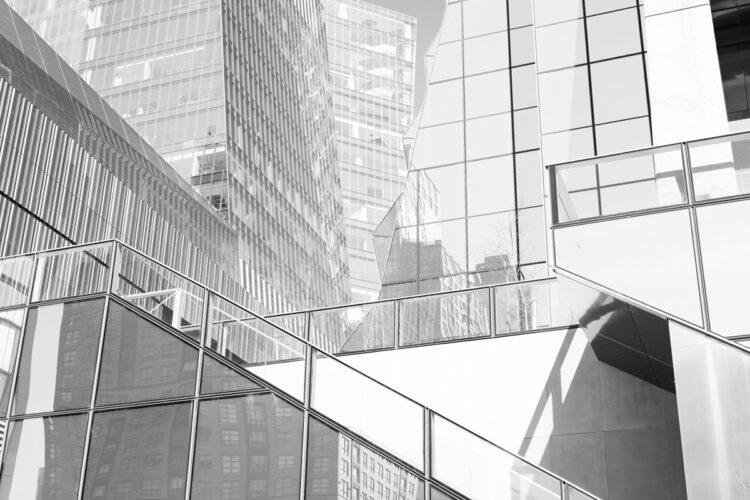
As you understand the area, the people, and the nuances more, your photographs will become much more intimate. It’s that intimacy and this repetition that will help you to build your vision and ultimately a cohesive street photography style.
Group and sequence your work while editing
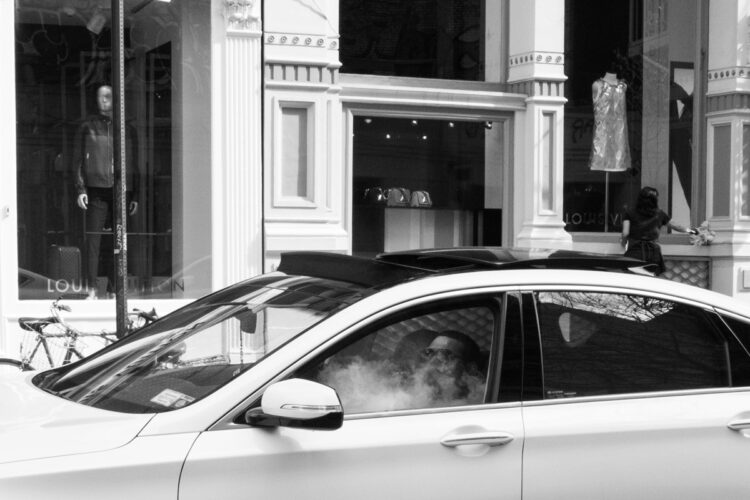
Editing is just as important as photographing for building a cohesive vision, maybe even more so. This is where you can group your photographs, see what’s working and what isn’t, and start to build a story or overall idea. This is where you create the look and feel of your photography.
It’s the work that you do in the editing process that will help inform you when you are out photographing. As you build your ideas, you will begin to see more moments out there that fit within them, and this cycle will continue and spiral faster and faster.
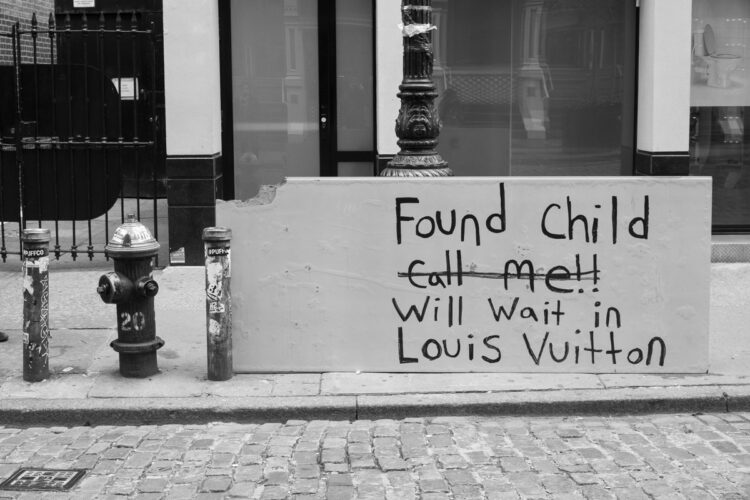
But keep in mind that your projects might change significantly over time. A few years later, a body of work may have a completely different feel and some of your favorite photographs early on may not even be part of the project anymore.
Put in the time
No matter what you do, there is no factor that is more important than how much time you spend photographing. You’re filtering the world to create a portfolio that adheres to your vision, and the moments that allow you to do that effectively just don’t come about very often.
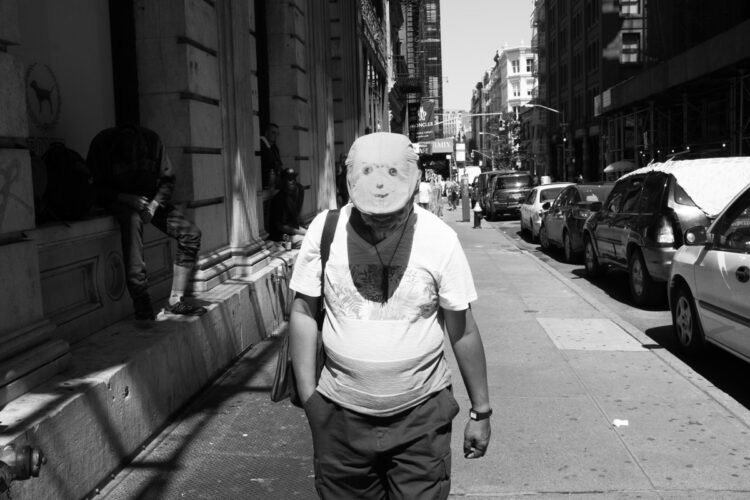
You need to be consistently dedicated to giving yourself the time to be lucky enough to build a significant portfolio of this cohesive work.
If you want to read more about street photography check out my newly updated ebook: The Essentials of Street Photography & Street Photography Conversations. CLICK HERE to buy it or get more details
Get $5 OFF the regular price of $19.95 (by using the discount code: DPM – a special just for Digital Photo Mentor readers!
- Completely rewritten and edited.
- 40 more pages.
- New Advanced Topics section with 8 additional chapters.
- Over 50% new photographs.
- Fascinating interviews with Alison Mcauley and Charalampos Kydonakis.
In conclusion, creating a unique street photography style is an evolving journey that blends technical skill with personal vision.
It’s about seeing the world through your own lens, quite literally, and capturing it in a way that resonates with your inner narrative. Whether it’s through the consistency of your gear and settings in each project, the emotional depth you bring to your images, or the unique perspective you offer by photographing familiar scenes in novel ways, your style becomes a signature that sets your work apart.
Your style is a reflection of your personality, your experiences, and your interactions with the ever-changing street scenes.
As you continue on this path, remember that your style is not static.
It grows and changes as you do, influenced by the people you meet, the places you explore, and the emotions you experience.
Your style is your storytelling tool in the vast, dynamic world of street photography. Embrace the journey, keep experimenting, and let your photos tell the story of not just what you see, but how you see it. This personal touch is what will make your street photography uniquely yours, creating a visual language that speaks volumes to those who encounter your work.
